King of Aquafa
The Deer KingThe King of Aquafa is the former ruler of Aquafa, a kingdom incorporated into the Zolian Empire. He retains a court and a role in public affairs, but his authority is sharply limited by the empire’s military and administrative power. His decisions show how he tries to preserve the lives and interests of Aquafa’s people within that constraint: first through negotiation over resistance, and later through cooperation when disease threatens both Aquafa and its Zolian rulers.
Rule and the limits of sovereignty
Before Zol’s conquest, the king’s authority over Aquafa’s mountain clans rested on an arrangement of allegiance and loose autonomy. The clans were not treated as Aquafaese citizens, although they spoke the kingdom’s language and had defended its borders against Mukonian incursions. Once Aquafa became a province, the distinction became consequential: Zol recognized the settled Aquafaese as ordinary citizens but did not extend that status to the mountain peoples. The king’s former relationship with the clans could not overcome the empire’s refusal to recognize them as citizens.
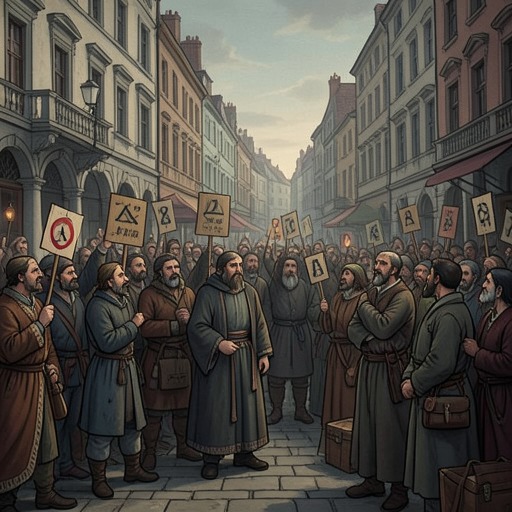
As Zol turned its attention to the final subjugation of the Toga region, the king sent messengers to the clans offering to negotiate for their safety in return for allegiance. His position was no longer that of a sovereign able to determine their status. He could plead for their lives, but he had no say over whether they would be allowed to remain in their homeland. The empire’s policy of relocating lower castes meant that refusal of ordinary citizenship could also mean forced removal to unfamiliar territory. This limit helps explain why the Gansa elders considered a strategy of feigned resistance: they hoped the clans’ military usefulness and knowledge of the mountains might persuade Zol to let them stay.
The transfer of power and Aquafa’s origins
The king’s constrained rule followed an earlier transfer of authority that had helped establish the Kingdom of Aquafa. During the collapse of the Ancient Kingdom of Otawalle, its last ruler, Takaluhalu, moved the capital to Kazan, a trading city that had escaped the epidemic, and transferred his authority to Kazan’s young ruler in return for a pledge to grant local autonomy to the realm’s diverse peoples. That young ruler became the first King of Aquafa. The kingdom’s foundation was therefore tied to the flight from disease and to a promise of local self-government, even as later conquest placed that promise under imperial pressure.
After Aquafa’s subjugation, the king relinquished his palace in Kazan to the Zolian governor and moved to a manor on the outskirts of the old capital, surrounded by woodland. Other royal family members lived in separate chambers across the spacious grounds. The setting makes the change in his position concrete: he remains a visible royal figure, but the former palace belongs to the occupying administration, and his residence is removed from the old center of power.
Relations with the empire and the frontier
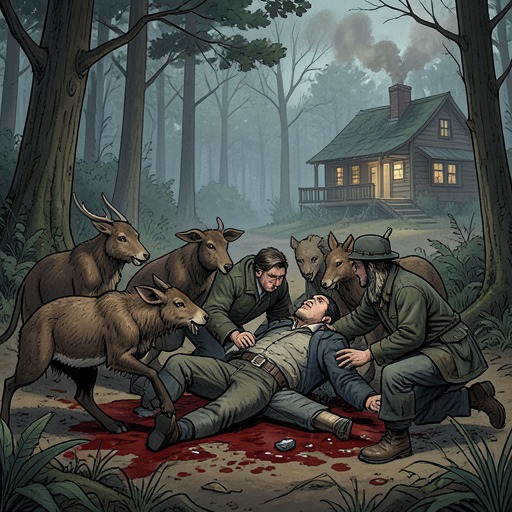
The king has pledged allegiance to the Zolian Empire, and he frames that accommodation against the longstanding danger from Mukonia on Aquafa’s western border. When Hohsalle’s account of the disease becomes part of a political confrontation between the governor and the king, the governor threatens severe punishment for anyone suspected of killing his son or spreading rumors that the deaths signify the Curse of Aquafa. The king listens without visible agitation, then says he will conduct his own investigation and present any perpetrators to the governor the following morning. He argues that political maneuvering must give way to the danger facing Aquafa’s population.
His appeal is also strategic. The king reminds the governor that Aquafa and Zol have been comrades for years, while Mukonia has threatened Aquafan territory for centuries. Preventing Mukonia from overrunning the land, he argues, requires both sides to do everything possible to prevent an epidemic. The governor’s expression falters as the king shifts the discussion from suspicion and retaliation to the shared security of the frontier. The king does not reject Zolian rule; he invokes the alliance as a reason for joint action.
Court and political conduct
The king’s later appearance at the governor’s palace places him in a formal but subordinate political setting. After Utalu’s funeral, Hohsalle is summoned to the audience chamber, where the king sits opposite the governor. Yotalu and senior statesmen are also present, and Tohlim stands among the attendants behind the king. The arrangement makes the king a participant in high-level deliberation, but not the host or presiding authority.
In contrast, when Hohsalle visits the king at his manor, the king receives him graciously and offers breakfast before learning that Hohsalle has already eaten. Hohsalle declines the meal because he wants to examine Mazai and Izam’s wounds. The welcome distinguishes the king’s personal hospitality from the governor’s reception, while the physician’s urgency redirects the encounter toward the epidemic investigation.
Political significance
The King of Aquafa’s position joins two political scales: the immediate negotiation over the mountain clans and the larger contest for the western frontier. His former authority once rested on a promise of local autonomy; under Zol, he can no longer guarantee that status to the people who had been allied with his kingdom. Yet he remains consequential as a mediator, able to negotiate, investigate, and remind the governor that the population’s survival is tied to the empire’s own strategic interests.
His response to the epidemic echoes the logic behind Aquafa’s earlier formation. Takaluhalu’s transfer of power had followed a catastrophe and preserved a political community through retreat and reorganization. The present king likewise treats survival as a reason to cooperate across a compromised political boundary. His rule is neither fully sovereign nor merely ceremonial: it is a restricted authority exercised through negotiation, practical responsibility, and appeals to shared danger.